Tell us your required quantity, preferred pack size, research application and delivery destination. Ask us to confirm lead time, shipping conditions and any available datasheet, certificate of analysis or safety data sheet with your quotation.
Disintegrin and metalloproteinase domain-containing protein 17
Product overview
ADAM17, also called TNF-α-converting enzyme (TACE), is a human cell-surface protease that releases extracellular portions of membrane-tethered signaling proteins. Its research relevance spans cytokine processing, receptor shedding and the regulation of inflammatory and growth-factor signals (2), (4).
ADAM17 connects events at the cell membrane with signaling between cells: proteolysis can change both the availability of a soluble mediator and the amount of its membrane-associated precursor or receptor. This makes regulated shedding relevant to the study of inflammatory responses and growth-factor communication (2), (4).
ADAM17 activity also depends on its cellular context. iRhom proteins help govern transport and maturation of the protease, so expression alone does not establish how much shedding a cell will produce (4), (6).
Structure
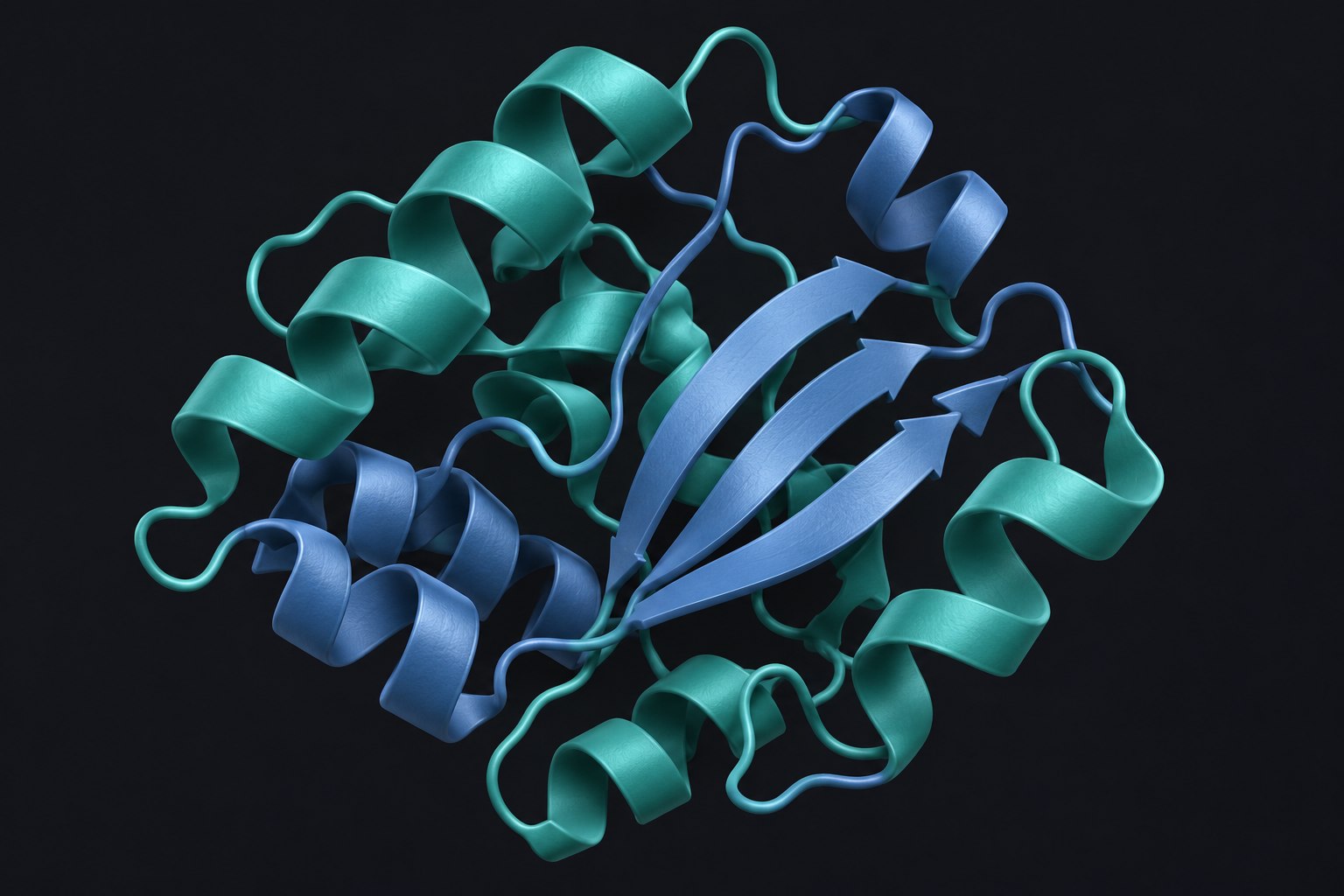
Domain organization: the human reference protein includes an N-terminal signal peptide and inhibitory prodomain, an extracellular zinc-dependent catalytic domain, disintegrin and membrane-proximal regions, a single membrane-spanning segment and a cytoplasmic tail (1).
Processing and topology: the reference annotation places the extracellular region at residues 215–671, the membrane-spanning helix at 672–692 and the cytoplasmic region at 693–824. Precursor processing separates the signal peptide and prodomain from the mature chain; these annotations describe the reference protein rather than a supplied fragment (1).
Structural evidence: a cryo-electron microscopy study examined the ADAM17 zymogen bound to iRhom1 and combined that experimental structure with simulations of a mature, active complex. The observed zymogen and modeled active state represent different stages of regulation (6).
Function
TNF processing: ADAM17 cleaves membrane-associated precursor TNF-α to release the soluble cytokine. Recombinant-enzyme experiments helped establish this processing activity (2).
Receptor shedding: reconstitution experiments demonstrated release of TNF receptors and the type II interleukin-1 receptor, with different domain requirements for individual substrates (3).
TREM2 cleavage: pharmacological, genetic and biochemical experiments implicated ADAM17 in human TREM2 ectodomain release and mapped cleavage between His157 and Ser158 in the systems examined (5).
Stimulus-responsive regulation: MAP-kinase-dependent phosphorylation of iRhom2 and recruitment of 14-3-3 proteins were linked to increased substrate shedding, providing a mechanism that connects upstream signals to protease activity (4).
Research Context
Experimental interpretation
A soluble substrate fragment can reflect enzyme activity, surface delivery, precursor maturation or the abundance of the substrate itself. A useful study therefore considers both released and cell-associated material, appropriate cleavage controls and the protein form being tested. This interpretation follows from the distinct effects of membrane anchoring, noncatalytic domains and iRhom-dependent regulation in the cited experiments (3), (4).
Evidence basis
The linked studies address different experimental questions: purified or recombinant enzyme, cell-reconstitution assays, substrate cleavage mapping and structural analysis of a regulatory complex. Their results provide complementary biological background, rather than a universal activity specification for every ADAM17 construct (2), (3), (5), (6).
Interactive 3D WebGLMolecular & Structural Laboratory